RER B 2026: Faster Paris CDG Trips
By CDG Airport Guide
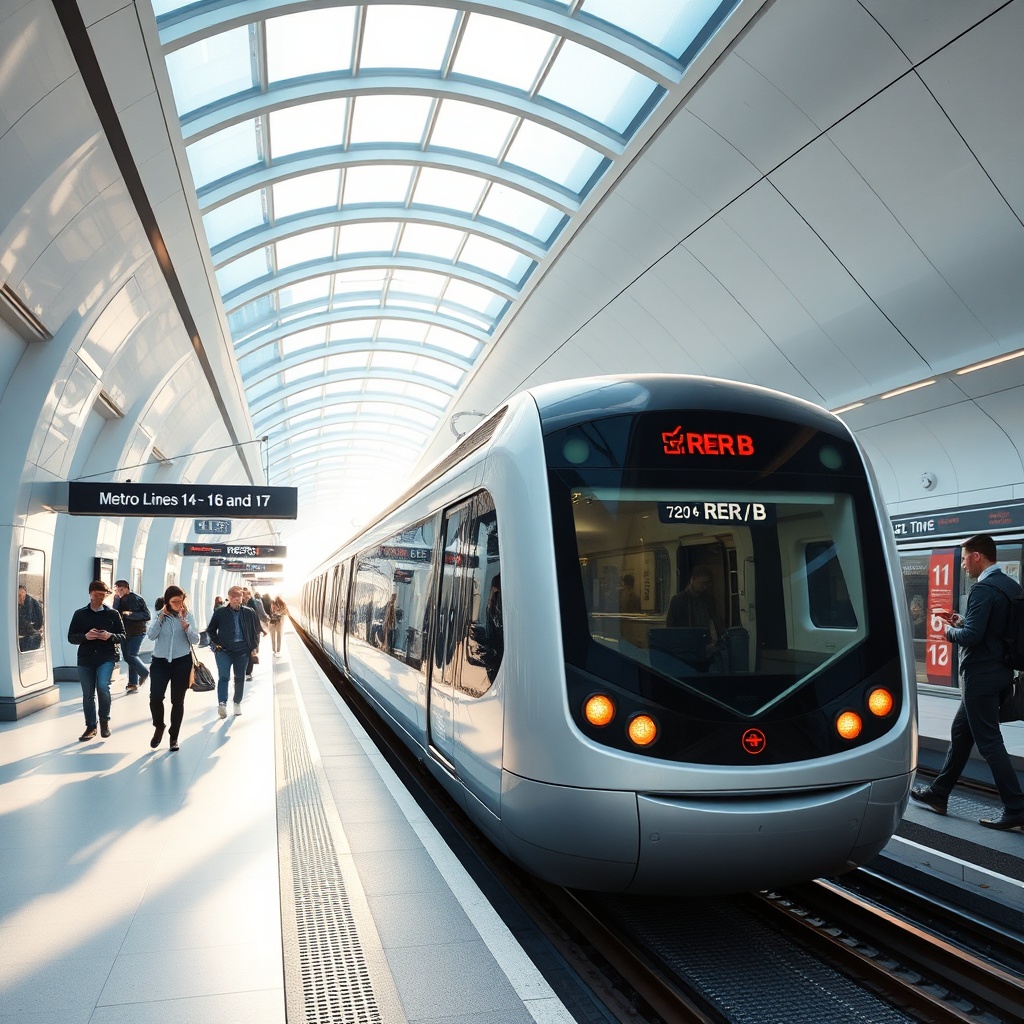
RER B 2026 marks a transformative year for Paris’s busiest regional rail line, with sweeping upgrades set to redefine commuting across Île-de-France. The RER B—connecting key hubs like Paris Nord, Châtelet-Les Halles, CDG Airport, and Saint-Rémy-lès-Chevreuse—is undergoing its most significant modernization in decades. By mid-2026, travelers will experience faster journeys, with Paris Nord to CDG Airport slashed from 30 to 25 minutes, alongside a 30% reduction in delays thanks to a €1.2 billion signaling overhaul. New stations like Saint-Denis Pleyel will integrate seamlessly with Grand Paris Express Metro Lines 14, 16, and 17, while 100% of stations will feature elevators and tactile paths for full accessibility. Digital innovations, including expanded contactless payment and a revamped mobile app, will streamline ticketing, and sustainability efforts aim to cut the line’s carbon footprint by 15% through electrification and regenerative braking.
Key Takeaways
- Infrastructure: €1.2 billion invested in track and signal upgrades, plus new stations like Saint-Denis Pleyel linking RER B to the Grand Paris Express network.
- Service: 6 additional trains per hour during peak times, with travel times reduced by 5-7 minutes on major routes and a 95% on-time target.
- Accessibility: Full elevator coverage and tactile paths across all stations by 2026.
- Digital: Contactless payment expansion and a new RER B mobile app with real-time crowd density updates.
- Sustainability: 15% carbon footprint reduction via electrification and energy-efficient braking systems.
The Complete Answer: What Is RER B in 2026?
A futuristic RER B train arrives at Saint-Denis Pleyel, highlighting the station's accessibility and seamless connection to the Grand Paris Express network.
Definition: RER B — One of Paris’s five Réseau Express Régional (RER) lines, the RER B is a high-capacity commuter rail service crossing Île-de-France from north to south, linking Paris Nord, Châtelet-Les Halles, CDG Airport, Orly Airport (via Antony), and Saint-Rémy-lès-Chevreuse or Robinson.
Core Function and Route Overview
RER B remains the backbone of Paris’s north-south transit, serving over 900,000 daily passengers in 2026. The line splits into two southern branches at Châtelet-Les Halles: one toward Robinson (16 stations) and the other to Saint-Rémy-lès-Chevreuse (14 stations). In the north, it extends to CDG Airport and Mitry-Claye, with Saint-Denis Pleyel becoming a critical interchange for the 2026 Paris Olympics, connecting to Grand Paris Express Lines 14, 16, and 17. The line operates 5:00 AM to 1:00 AM, with 2-4 minute frequencies during peak hours in central Paris.
 A passenger interacts with a digital ticketing kiosk at an RER B station, showcasing the line's new contactless payment system and real-time updates.
Major Changes and Modernizations in 2026
The RER B 2026 modernization prioritizes capacity and reliability. New automatic train control (ATC) systems replace outdated signaling, enabling shorter headways and reducing human error-related delays. The €1.2 billion upgrade also includes platform extensions at 12 stations to accommodate longer 10-car trains, increasing capacity by 20%. Environmental measures, such as regenerative braking, recapture energy during deceleration, cutting per-train energy use by 20%. These changes align with Île-de-France’s goal to make public transport carbon-neutral by 2040.
Quick Answer: RER B in 2026 is a faster, more reliable, and eco-friendly rail line with new stations like Saint-Denis Pleyel, upgraded signals reducing delays by 30%, and travel time cuts (e.g., Paris Nord to CDG in 25 minutes). Accessibility and digital tools, including contactless payment, enhance the commuter experience.
RER B 2026 Infrastructure Upgrades: A Detailed Breakdown### New Stations and Extensions
The Saint-Denis Pleyel station, opening in June 2026, is the centerpiece of RER B’s expansion. Located near the Stade de France, it will serve as a multi-modal hub, integrating with Metro Line 14 (extending north), Grand Paris Express Line 16 (to Saint-Denis and Le Bourget), and Line 17 (to Le Mesnil-Amelot). This station alone is expected to handle 150,000 daily passengers, easing congestion at Châtelet-Les Halles. Additional upgrades include elevator installations at La Plaine-Stade de France and Le Bourget, completing full accessibility compliance.
Track and Signal Modernization
The €1.2 billion signaling overhaul introduces European Train Control System (ETCS) Level 2, allowing trains to run at higher frequencies with 90-second intervals in core sections. Track renewals cover 40 km of rail, replacing 30-year-old infrastructure prone to speed restrictions. Weichen (switches) and crossings at Paris Nord and Gare du Nord have been rebuilt to eliminate bottlenecks, while noise-reducing barriers along 15 km of track near residential areas address long-standing community concerns.
Accessibility Enhancements
| Feature | 2025 Status | 2026 Upgrade |
|---|---|---|
| Elevators | 60% of stations | 100% of stations |
| Tactile Paths | Partial coverage | Full coverage |
| Audio Announcements | Basic | Real-time, multilingual |
| Priority Seating | Limited | Expanded and marked |
Quick Answer: RER B 2026 infrastructure upgrades include the Saint-Denis Pleyel station (linking to Grand Paris Express), €1.2 billion in signal modernizations cutting delays by 30%, and 100% accessibility with elevators and tactile paths at every station. Track renewals and noise barriers further improve reliability and community relations.
Service Improvements: Speed, Frequency, and Reliability### Increased Train Frequency
During morning (7:00–9:30 AM) and evening (5:00–7:30 PM) peaks, RER B will add 6 trains per hour on the Paris-Nord to Robinson branch and 4 trains per hour on the Saint-Rémy-lès-Chevreuse branch. Off-peak frequencies improve from 10 to 8 minutes on core segments. These changes are enabled by the ETCS signaling system, which allows safer, closer train spacing.
Reduced Travel Times
- Paris Nord to CDG Airport: 30 → 25 minutes (17% faster)
- Châtelet-Les Halles to Massy-Palaiseau: 22 → 18 minutes (18% faster)
- Denfert-Rochereau to Saint-Rémy-lès-Chevreuse: 55 → 48 minutes (13% faster)
- Gare du Nord to Robinson: 28 → 24 minutes (14% faster)
Reliability Metrics
The 2026 target for on-time performance (defined as arriving within 2 minutes of schedule) is 95%, up from 88% in 2025. Delays longer than 5 minutes will drop by 40%, thanks to predictive maintenance using IoT sensors on trains and tracks. A new real-time passenger information system will provide crowd density updates and alternative route suggestions during disruptions.
Quick Answer: RER B 2026 boosts service with 6 more peak-hour trains, cutting travel times (e.g., CDG in 25 minutes) and targeting 95% on-time performance. Predictive maintenance and real-time apps reduce delays, while IoT sensors monitor track and train health.
---## Digital and Ticketing Innovations for RER B in 2026### New Mobile App Features The RER B mobile app (available on iOS and Android) introduces AI-powered trip planning, which learns commuter patterns to suggest optimal departure times and less crowded cars. A seat availability predictor uses historical data to indicate low-, medium-, or high-occupancy trains. The app also integrates bike-sharing locations near stations, promoting multi-modal trips.
Expansion of Contactless Payment
Contactless bank cards and smartphones (via Apple Pay, Google Pay, or Samsung Pay) are now accepted at all RER B stations, eliminating the need for physical Navigo cards. The system supports open-loop payment, where fares are automatically calculated based on entry and exit points, with daily capping at the cost of a Navigo Jour pass (€8.45 in 2026). QR code tickets, purchasable via the app, offer an alternative for occasional travelers.
Quick Answer: RER B 2026 digitizes ticketing with contactless bank card payments, AI trip planning in the mobile app, and QR code tickets. Open-loop payment caps daily fares at €8.45, matching Navigo passes, while seat predictors help avoid crowded trains.
---## Environmental and Sustainability Initiatives### Electrification and Energy Efficiency All RER B trains in 2026 will use 100% renewable electricity, sourced from EDF’s hydroelectric and wind farms. Regenerative braking systems, installed on 80% of the fleet, recover up to 20% of energy during deceleration, feeding it back into the grid. LED lighting and energy-efficient HVAC systems reduce train energy consumption by 15%.
Carbon Footprint Reduction
The 15% carbon footprint reduction target is achieved through electrification of auxiliary systems (e.g., heating, cooling) and eco-driving training for operators. Solar panels at 5 major stations (including Saint-Denis Pleyel) generate 2 MW of power annually, offsetting 500 tons of CO₂. Additionally, tree-planting initiatives along the line’s corridors aim to sequester 1,000 tons of CO₂ by 2027.
Quick Answer: RER B 2026 cuts its carbon footprint by 15% via 100% renewable electricity, regenerative braking (saving 20% energy per train), and solar panels at key stations. Eco-driving and tree-planting further offset emissions, aligning with Paris’s 2040 carbon-neutral goal.
---## FAQ: RER B 2026 Essential Questions How will RER B 2026 affect my daily commute? Your commute will likely be faster and more reliable. Travel times between major hubs like Paris Nord and CDG Airport drop to 25 minutes, and 6 additional peak-hour trains reduce crowding. Delays are expected to decrease by 30% due to upgraded signaling, while real-time apps provide crowd density updates to help you choose less busy cars.
What are the new stations opening on RER B in 2026? The Saint-Denis Pleyel station is the most significant addition, opening in June 2026 as a multi-modal hub connecting RER B to Metro Line 14 and Grand Paris Express Lines 16 and 17. Smaller upgrades include elevator installations at La Plaine-Stade de France and Le Bourget, ensuring full accessibility.
How do I use contactless payment on RER B? Simply tap your contactless bank card, smartphone (Apple Pay/Google Pay), or wearables at the entry and exit gates. The system calculates your fare automatically, with daily capping at €8.45 (matching the Navigo Jour pass). No pre-registration is needed—just ensure your card supports EMV contactless transactions.
Are there any planned disruptions during the 2026 upgrades? Minor disruptions are expected during off-peak hours (10:00 AM–3:00 PM and after 9:00 PM) on select weekends in Q1 2026 for final testing of the ETCS signaling system. However, no full-line closures are planned. Check RATP’s website or the RER B app for real-time updates and alternative routes.
What sustainability measures are being implemented on RER B? RER B 2026 introduces 100% renewable electricity for all trains, regenerative braking (recovering 20% of energy), and solar panels at 5 major stations (generating 2 MW annually). Eco-driving training for operators and tree-planting initiatives along the line further reduce the carbon footprint by 15%.
---## Conclusion: Preparing for RER B’s Future RER B 2026 represents a leap forward for Parisian transit, blending speed, reliability, and sustainability to meet the demands of a growing city. With faster journeys (e.g., CDG in 25 minutes), reduced delays, and full accessibility, the line is poised to enhance daily life for 900,000+ commuters. Digital advancements like contactless payment and AI trip planning simplify travel, while green initiatives align with global climate goals. As the 2026 Paris Olympics approach, these upgrades ensure RER B remains a world-class transit system. To stay ahead, download the RER B mobile app today and explore the new Saint-Denis Pleyel station—your gateway to a smarter, faster Paris.